
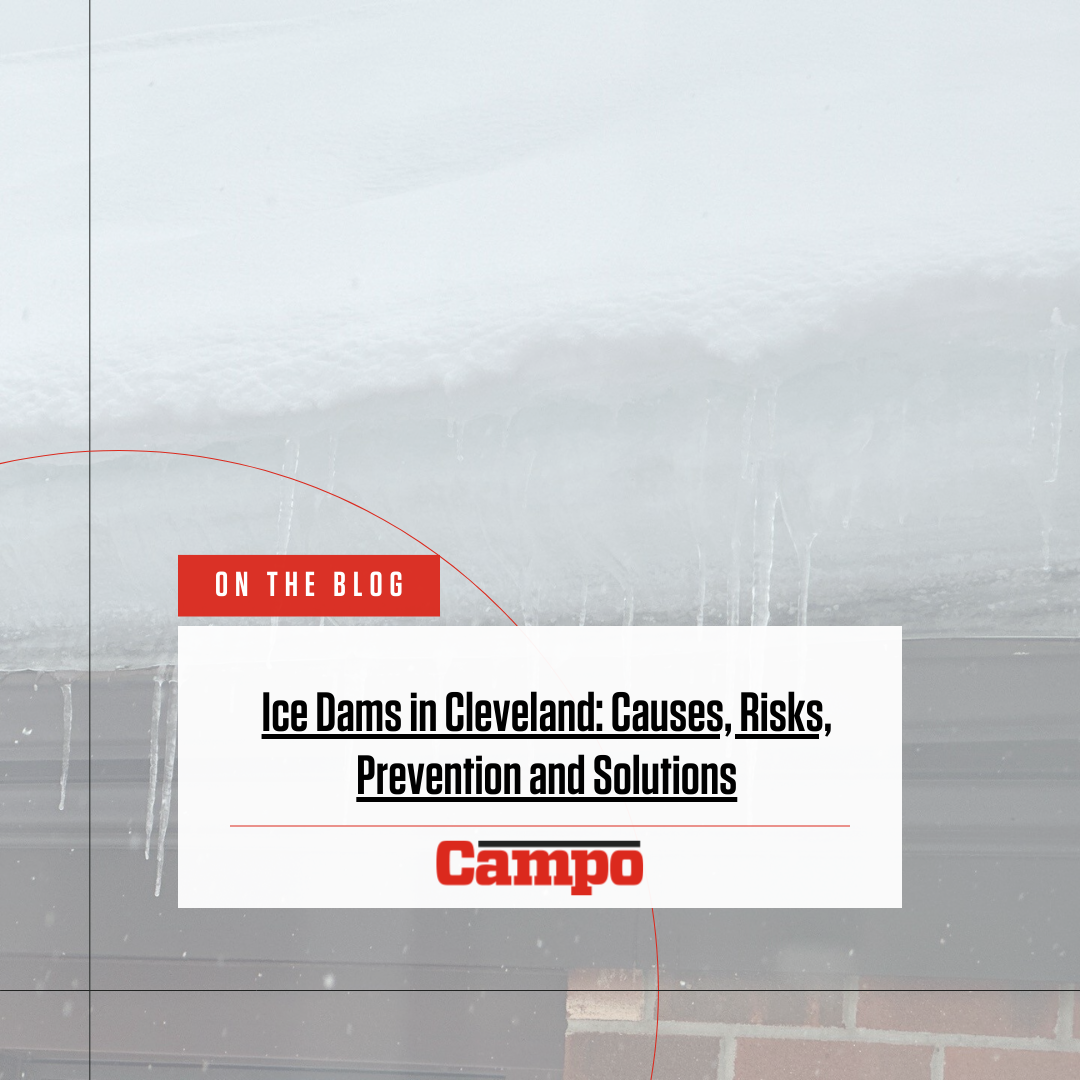
A lot of homeowners in Cleveland are dealing with ice dams right now, and it’s not surprising given the polar vortex conditions we’ve had recently. When temperatures sit in the single digits for days at a time and snow doesn’t fully melt between storms, the conditions are ripe for problems to show up.
The simplest explanation is this: ice dams form when heat from inside your home melts snow on the upper part of your roof, and that water refreezes at the colder eaves.
How Ice Dams Form
That ridge of ice builds up over time. Once it’s thick enough, water backs up behind it and works its way under shingles. That’s when you start seeing stains on ceilings, bubbling paint, or water running down walls.
Cleveland homes are especially prone to this. Many were built decades ago — solid construction, but not designed with modern insulation and ventilation standards. Older colonials and other older home styles often have limited attic insulation, inconsistent soffit ventilation, and wide overhangs that stay significantly colder than the roof plane.
When you add in finished attic spaces or recessed lighting, you’ve now got even more opportunities for warm air to escape upward.
When the roof surface warms up slightly and the overhang stays frozen, ice dams are almost inevitable.
Once they form, homeowners can usually consider two options: chipping the ice away with a pick or hiring someone to steam it off.
Ice Dam Removal
Using a pick is the method most people try first. It feels immediate and inexpensive. But asphalt shingles in freezing temperatures are brittle. Striking them with force can crack shingle tabs, damage underlayment, or bend flashing. You may clear the ice but create roof damage that doesn’t show up until spring rain arrives.
There’s also the safety factor– getting on top of a snow and ice covered roof during a Cleveland winter is generally not a good idea!
Steam removal works differently. Our commercial steamer melts channels through the ice, allowing trapped water to drain without impacting the roofing materials. It’s slower and more expensive upfront, but it significantly reduces the risk of damaging the roof system. From our standpoint, steaming is the safer method when removal is necessary and could save you money in the long run.
That said, removal is only part of the equation homeowners need to consider.
The Symptom, Not The Cause
Ice dams are rarely caused by snow alone. They’re caused by heat loss and ventilation imbalance. Long-term prevention often involves air sealing attic penetrations, improving insulation levels, and ensuring proper airflow from soffit to ridge. During reroofing projects, adequate ice and water shield at the eaves is also critical — and many older Cleveland homes either lack it entirely or have minimal coverage from when the roof was last replaced.
For homeowners, the practical takeaway is straightforward: if you’re seeing ice buildup year after year, it’s worth looking beyond the surface. Understanding how your attic is performing gives you options — whether that’s targeted insulation improvements or planning for better protection during your next roof replacement.
The polar vortex will move on. The underlying conditions in your attic won’t change unless they’re addressed.
If you’re seeing signs of an active leak or recurring ice dams, we’d like to come out to do a free 25-point inspection to give you a clear assessment of your roof and attic. Knowing what you’re working with allows you to make decisions based on the condition of your home — not just the weather outside.
Looking to start a home exterior project? Let us know and start the conversation